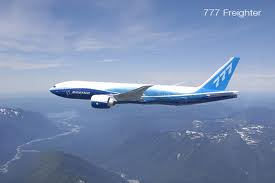
Freighter Fleet to Double in 20 Years, Boeing Predicts
The world freighter fleet will nearly double during the next 20 years to keep pace with 5.2 percent annual growth of air cargo traffic, according to Boeing.
The increase, from 1,700 aircraft in 2011 to 3,200 aircraft in 2031, will be driven by global economic growth and the need to replace aging freighters, the aircraft manufacturer said.
Of the 2,760 freighter deliveries through 2031, 1,820 will be conversions from passenger jets, while the remaining 940, valued at $250 billion, will be new, according to Boeing’s Current Market Outlook 2012-2031.
Boeing forecast a demand for 1,120 standard-body freighters, nearly all of which will be passenger conversions. This is because the low capital cost of converted planes makes them attractive for the low-demand routes flown in standard-body operations.
Of the 710 medium widebody freighters delivered in the next 20 years, 260 will be newly built. This market segment is driven by express carriers, which value the balance between the lower cost per metric ton achieved by larger aircraft and the schedule flexibility of smaller airplanes.
Of the 930 large freighter deliveries, 680 will be new planes, Boeing said. While converted freighters are attractively priced, the performance and reliability of new, purpose-built freighters outweigh this consideration — particularly for intercontinental cargo operations, where larger payloads and extended ranges are crucial.
“Lately, with rising fuel prices, shippers have settled for slower modes of transport. But the speed advantage of air cargo ensures air freight’s role in the global economy,” Boeing said.
Cargo capacity on passenger flights has been expanding with the development of planes such as the 777-300ER. But freighters, with larger payloads and routes and frequencies optimized for cargo, carry the majority of traffic — about 60 percent.
West Coast Faces Capacity Squeeze If ILA Strikes, Maersk Says

Capacity going through U.S. West Coast ports will be in short supply if the International Longshoremen's Association strikes or is locked out at East and Gulf Coast ports, according to the world’s largest container line.
Thomas Knudsen, Maersk Line’s Asia Pacific CEO, said shippers seeking to divert shipments into West Coast ports would find capacity scarce. “Our utilization into West Coast ports is already in the mid- to high 90s so there is almost no capacity left.” Knudsen said. “We can take a little more, but not a major overflow.”
The strike or lockout by the ILA could begin at the start of October when its existing contract with terminal operators covering ports from Maine to Texas, represented by the United States Maritime Alliance, comes to an end.
Maersk Line was one of a number of carriers to file precautionary congestion surcharges with the Federal Maritime Commission in case of a strike.
“Should there be no labor action and subsequent congestion disrupting operations, this tariff filing will be nullified,” the carrier said.
-----------------------------------------------------------------------------------------------------------------------------------------------------------
News by Reid
ETC Intl. Freight System is a licensed freight forwarder, NVOCC bonded & a California Corporation since 1984. Whether, you seek air or ocean freight & to our broad customer base, we offer warehousing, distribution, packing, crating, trucking, customhouse brokerage & inland delivery/pickup services. For more information or pricing through the web, please visit us at www.etcinternational.com.