ETC INTERNATIONAL FREIGHT SYSTEM
International Shipping, Container Shipping, Ocean Shipping, Global ogistics, Forwarders in California, International Forwarding
Let us not forger the canal of Suez. JOC report addresses it below:
Ocean Carriers Betting on Suez Services
Peter T. Leach, Senior Editor | Jan 15, 2013 11:23AM EST
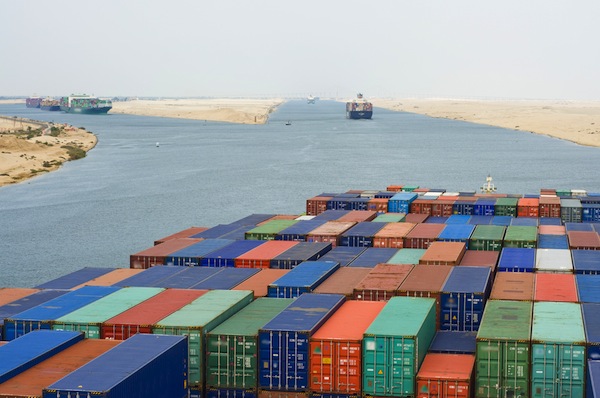
Ocean carriers are planning to beef up the capacity of their services from Asia to the U.S. East Coast via the Suez Canal this year while consolidating or even reducing the number of all-water loops they deploy on the trade lane from Asia to the East Coast via the Panama Canal.
“The area to watch is the Suez routes,” said Curtis Foltz, executive director of the Geogia Port Authotity “Most carriers are taking a neutral position on the Panama routes. Suez will be the place for expansion on the East Coast, and people will be looking to upgrade tonnage and consolidate services where they make sense.”
The G6 Alliance among the six carriers that belong to the Grand Alliance (OOCL, NYK and Hapag-Llyod) and the New World Alliance (APL, Hyundai Merchant Marine, MOL) is planning to announce more Asian services to East Coast ports via the Suez Canal in the next few weeks, according to the head of the one of those carriers’ Americas division, who asked not to be identified because plans are not finalized. At the same time, those carriers plan to consolidate some of their loops through the Panama Canal, because making money on the Panama Canal route is “difficult,” he said.
“Any carrier that has built a significant number of post-Panamax ships is looking to deploy 8,000-TEU ships to the East Coast if they haven’t already done it,” said Jim Newsome, president and CEO of the South Carolina Ports Authority. “MSC has done it; Maersk has done it; Maersk and CMA CGM are looking to do more; and the G6 Alliance will announce one 8,000-TEU service, the first of their East Coast services using that size ship.”
The only carriers not deploying post-Panamax ships on the Suez route to the East Coast are those that have not taken delivery of new orders for the big fuel-efficient post-Panamax ships, such as the members of the CKYH Alliance — Cosco, “K” Line, Yang Ming and Hanjin, he said.
The reason is pure economics. Carriers can make a profit using large post-Panamax ships that can carry up to 9,200 20-foot-equivalent units on the Suez route to the East Coast and thus have lower slot costs than Panamax ships. But they can’t make a profit on the Panama route because the less fuel-efficient Panamax ships are limited to a capacity of around 4,800 TEUs by the size of the existing Panama Canal locks. The new post-Panamax ships are 30 percent more fuel efficient than the older post-Panamax ships and can provide savings of as much as $40,000 per day in fuel costs.
Compounding the higher operating cost on the Panama route is the fact that U.S. retail importers won’t pay the freight rates the carriers are seeking for that trade lane. In preliminary annual contract talks for 2013 that have already taken place, trans-Pacific carriers have sought an increase of 2 percent in their all-water services to the East Coast via Panama, but the beneficial cargo owners have demanded a discount of 3 percent, according to one informed source who related the information off-the-record.
As a result, port executives expect carriers to consolidate some of their Panama services to the East Coast and to refrain from introducing any other new services aside from upgrading ships on the Suez route.
The Port of New York and New Jersey also expects to see more cargo growth on the Suez route. “China will remain our largest trading partner, but we foresee increasing import volumes from Southeast and East Asia as manufacturing of some products migrates from China to locations like Indonesia, Vietnam, India, Pakistan and Bangladesh,” said Richard Larrabee, port commerce director of the Port of New York and New Jersey. “This should lead to increased cargo volumes coming to our port via the Suez Canal, which allows ocean carriers to realize economy of scale by using post-Panamax vessels.”