Your international shipping is not sheltered by disasters.
The chance of containers lost at sea is less than likely.

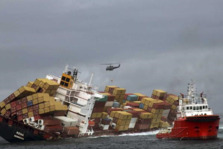
The chance to get pilferage or your shipment broken up due to a crash might be higher!


It does not have to be your disaster. Experienced shippers purchase " cargo insurance "
Any customer is entitled to purchase " cargo Insurance " coverage through ETC Intl. Freight System. The types of insurances available to commercial and private parties are:
- All Risk (including War Risk) via Air, Ocean and Truck
- FPA (Total Loss/Catastrophic) Coverage
Free of Particular Average Coverage (FPA) is one of two standard coverage options available under most cargo policies. Derived from
an old English term, its name essentially means underwriters are not responsible to pay partial losses. Frequently used by logistics
providers and shippers in certain facets of industry, it is ironic that despite its prevalence it is generally misunderstood by the people
who buy and sell it everyday.
The most common misconception of FPA is that it is 'Total Loss Coverage' which has become its nickname in the transportation
industry. FPA coverage actually does pay for partial losses that arise from covered perils, even though its name means 'free from
partial loss'. In addition, there are a number of total loss incidents that would not be covered under standard FPA coverage, such as
hijacking of a trailer, non-delivery of a container or breakbulk cargo being dropped during loading or unloading processes. The best
way to describe FPA is 'Named Peril Coverage', as it will only pay for losses attributed to specifically stated events that are usually
quite significant. The conditions covered under FPA can vary so it’s important to check the clause in your policy prior to using it.
FPA’s benefit is that it will provide basic coverage for goods that are nearly uninsurable such as used, damaged or very old goods or
goods that are exceptionally prone to damage or theft. However, if your underwriter is willing to provide "All Risk" coverage, it is
strongly recommended that this be taken, even though it comes at a higher price. Many shippers see the lower rates offered for FPA
coverage and in an attempt to save money, opt for the cheaper pricing. However, this could end up costing more in the end as an
uncovered loss could severely impact the finances of small to medium size companies who cannot sustain a large uncovered loss.
If FPA is the only option available, it is best to ask your insurance provider whether 'Theft and Non-Delivery of the entire shipping
container' and 'Jettisoning and Washing Overboard' can be added. While the coverage is still limited, these extensions can provide
additional coverage to very real perils; however, it is still recommended to opt for "All Risk" coverage, and this is only suggested
when FPA is unavoidable.
Here are a few real life examples of how FPA can leave a company without the required coverage, even when the loss seems like it
would be covered.
A heavy equipment shipper recently found their $100,000 piece of equipment was not covered when the stevedore dropped it
during loading operations. The shipper thought their normal "All Risk" conditions would apply since the equipment was refurbished
in 'like new' condition, but their policy clearly stated FPA Conditions would apply to used equipment and did not specify that
‘refurbished’ equipment could be covered. “All Risk” coverage was denied with no recourse as FPA does not cover damage during
loading and/or unloading.
Another shipper was surprised to learn their container, which was jettisoned overboard during heavy seas, was not covered under
FPA conditions. The shipper was trying to save money and was told FPA would cover them if anything happened during the vessel's
voyage. Had the insurance broker added "Jettison and Washing Overboard" to the FPA clause, it would have been covered.
The good news is that coverage is available to meet each of these shippers’ needs moving forward. Shipper A’s dilemma
demonstrates the inadequacy of FPA coverage for even the most basic of potential perils–damage during loading. “All Risk”
coverage offers far more comprehensive protection and should be the first choice of shippers except in very specific situations.
While again highlighting FPA’s limited scope, shipper B’s example shows that standard FPA can be expanded to cover additional
items intrinsic to an ocean voyage such as jettisoning or washing overboard of the container.
An all-risk cargo insurance policy is the broadest form of shipping insurance and will cover any physical loss/damage from any external cause. An all-risk policy will list any exclusions that are not covered, which can be added on to the policy as an additional clause
Please note that upon choosing your cargo insurance, you hereby accept and will adhere to the underwriter.
When asking for a freight quote, please request our competitive insurance rates. 1-800-383-3157 - Sales@etcinternational.com