- Ports congestion in the US, also found overseas, driving rates upward.
- Congestion worsens at Rotterdam, spreads to Antwerp, Hamburg
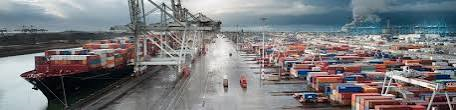
Content sourced Joc
Worsening congestion at the port of Rotterdam has prompted two short sea and feeder shipping lines to impose surcharges of around $100 per container.
Shippers could also be hit by congestion surcharges at one of Hamburg’s largest terminals, and Antwerp is showing the first signs of cargo bottlenecks as the European vacation season
gets into full swing.
Team Lines, a German feeder operator, said the situation in Rotterdam has not shown “any significant improvements” since the end of May, when it was experiencing berthing delays of up to 48 hours at the ECT Delta terminals.
The terminals “are still facing severe congestion and the operational constraints are increasing,” leading to extra costs and disruptions to its schedules at Europe’s largest container port, the company said.
Team Lines said it will impose a surcharge of €75 ($102) per 20-foot container from August 1 until further notice for all vessels arriving at and departing from the ECT Delta and Euromax
terminals to compensate for the extra costs caused by the congestion.
OPDR, a German short sea carrier, said it has no option but to levy a €75/TEU surcharge on all containers handled at the ECT Delta and Euromax terminals from August 1 in response to the
months-long congestion, which has “huge impacts on our schedule integrity and, moreover, causes great costs.”.
Contargo, a leading container barge operator, announced a congestion surcharge of €15 per container through August for cargoes transported to and from Rotterdam to cover additional costs for unloading at different terminals, trucking within the port, reducing its capacity
and chartering additional barges.
Contargo said its vessels have faced increasingly long delays at Rotterdam terminals, with “processing times of 50 hours, peaking at up to 90 hours ... no longer unusual.” Processing times have increased by a third since April, it said.
The congestion in Rotterdam, Europe’s largest container port, is blamed on the late arrival of deep-sea container vessels, system outages and labor shortages. The berthing delays at ECT Delta are also related to an upgrade involving the installation of five new quay cranes, automated guided vehicles and automated staking cranes. ECT is owned by Hong Kong-based Hutchison Port Holdings. The logistics software firm CargoSmart reported in June
that delays at Northern European ports appear to be associated with larger
vessels.
Short sea and feeder carriers, barge operators and truckers are also bracing for delays at Europe’s second- and third-largest container ports, Hamburg and Antwerp, as longshoremen go on vacation at the height of the peak shipping season. The increasing deployment of mega-ships, particularly on the Asia-Europe route, also is creating greater volume peaks that are straining terminal capacity in the Le Havre-Hamburg port range.
“Now that the holiday season has begun, frst signs of bottlenecks are appearing in Antwerp too,” according to Contargo, which said it is keeping a very close eye on the processing situation at the Belgian port “so that counter measures can be taken in good time.”
Team Lines said it is facing continuing operational problems at HHLA’s Hamburg Burchardkai terminal and has received further warnings about delays in the dispatch of vessels at the German port.
The company warned in March that it was facing problems at other German hub ports “where the terminals are congested, suffering slower operations and lacking in berth capacity.”
The congestion at Rotterdam and Hamburg is on a scale last witnessed during the global container boom of the early to mid-2000s, according to Drewry Maritime Research.
HHLA last week said it is hiring 50 extra workers at the terminal on top of the 100 hires last year, some of whom are still being trained, as part of a plan to deal with ever-increasing peaks
in container shipments.
“Everyone in the logistics chain has to accept that peak loads will occur more regularly than before as we go forward,” said Heinz Brandt, HHLA’s chief human resources officer.
“The constantly rising peak loads place serious operational demands on logistics companies and mean significant strain for the [HHLA] staff members. Our employees have met these challenges head on,” he said.
The Burchardkai terminals handled 63 ocean-going vessels with more than 3,000 container moves per vessel in the first of 2014, compared with 29 vessels in the first half of 2008.
Peak loads for rail containers have increased by 21 percent since 2008 and those for trucks are up almost 11 percent, HHLA said.
Trucking companies have imposed a traffic congestion surcharge of €40 per haul within Hamburg city limits and €80 beyond the city boundary.
HHLA said it denies “all of the talk about go-slows or absenteeism because of the [soccer] World Cup.”
-----------------------------
Europe is one of our larger markets. ETC International Freight System, can provide you with air rates, ocean rates for import or export cargo. Contact our sales department via email for a fast quote at Sales@etcinternational.com or click the button below: