Air cargo rates take off and freight piles up in China as shippers switch from sea
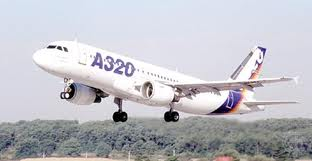 courtesy to Zim Lines. In signs reminiscent of the 2009 air freight peak, forwarders in Asia are reporting an air cargo backlog in Hong Kong and Shenzhen, which is showing no signs of easing. Despite more than
15 air freight charters booked in the last few days space remains tight – and prices are continuing to rise. “Airlines have been waiting for this since 2009, and they keep increasing the rate on a weekly basis,” said James Gagne, chief operating officer of SEKO Logistics. “Ocean freight is switching to air and the air export market from Hong Kong remains hot, mainly due to space constraint.” And to exacerbate the problems, some freight and passenger flights have been cancelled.
Mr. Gagne added: “One of the major factors is that some Chinese airlines are switching more than 20 freighter aircraft to transport relief medical material to West Africa for the Ebola crisis. “We have entered a re-run of 2009’s ‘V-shaped’ bounce-back from the post-global financial crisis, when airfreight rates spiked overnight. However, this time there is the added dimension of port congestion which is forcing sea freight to air.” While the west coast port situation, combined with the holiday season, is undoubtedly adding to the problems, there are also
structural issues in the US which may prevent the congestion from easing significantly in the short term. Larger ships with bigger cargo volumes, gate hours, labor staffing and productivity are all problems, added Mr. Gagne. “Vessel bunching is also a problem – big ships are delayed in getting worked on due to sub-optimal number of work gangs assigned.” He also noted that carrier alliances were impacting the ability of truckers to match the right chassis with the right container, and that imbalances and shortages were rife across west coast terminals. Brian Bourke, vice-president of marketing for SEKO, said:“We understand that shipping lines do not want to own chassis equipment, they are investing in big modern ships. So we are looking for solutions to this problem for our customers.” Shippers were eyeing the US east coast and Reverse Inland Point Intermodal options, said Mr. Gagne, even for shipments bound for
the Mid-West. “If we have a repeat – or worse – of last year’s north-eastern freeze, we will see the ‘perfect storm’. “Customers would do well to enhance engagement with their logistics service providers to collaborate on solutions which balance inventory holding requirements and transit/cycle time,” he advised.
Much more container growth coming, Clarkson’s tells JOC London event
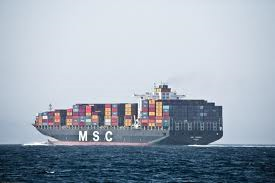
Even at lower rates of growth in container volumes globally, ports will still have to absorb hundreds of millions of additional TEUs over the next decade, a challenge for marine
terminals over and above the painful transition to an era of big ships. Brushing aside a frequent theme in container shipping forecasts that growth in the future will be no greater than global GDP growth -- after having grown at more than double the pace of GDP from 1997-2003 -- Clarkson’s lead container analyst Trevor Crowe told ports to brace for a lot more volume headed their way. “Container trade growth, even at a slower rate, still outpaces global growth,” he told the JOC Port Performance Conference-Europe last week in London. In other words, it would be a mistake to overly focus on slowing growth, he said, in assessing the impact of growth on port congestion. His base case, neither aggressive nor conservative, calls for a 5 percent average growth in volumes through 2024, (with growth expected to hit 6 percent 2014 and 6.7 percent in 2015). In the 5 percent growth scenario, throughput would grow from 692 million TEU (20' container equivalent) lifts in 2014 to 1.15 billion TEU lifts by 2024, an additional 458 million TEUs. The figure refers to total lifts, including empties. Even in a low growth scenario of two percent growth, throughput reaches 993 million TEU lifts by
2024, an additional 301 million TEUs versus today’s volumes. His high-growth scenario in which average growth accelerates to 8 percent yields 1.32 billion TEUs by 2024, an additional 628 million TEUs over current volumes.
He agreed container growth is slowing -- lifting’s grew by an average of 11.7 percent in the 1970s and 1980s and had slowed to a 6.9 percent pace since 2010, but said the drivers of growth haven’t exhausted themselves. Conversion of cargoes to containers from other modes is still ongoing, the Chinese consumer is an emerging factor and intra-Asia component trade is huge and growing, with wage differentials still driving multi-location processing, he said. He said near-sourcing is a factor but that there is “no clear consensus” yet on its impact. Containers have long been the fastest growing mode of ocean transport, and container growth has not yet declined to the level of, say, oil transport. Cumulative annual growth of containers was over 8 percent from 1990-2013, versus 4 percent for dry bulk and about 2.5 percent for oil and liquid products, considered mature products unlike containers which haven’t yet reached that stage of maturity. The result is that in understanding pressures on ports, underlying container growth can’t be ignored. Crowe concluded that the focus in container shipping is now returning to ports after a hiatus since the onset of the financial crisis in 2007. “The downturn in trade volumes provided a bit of breathing space,” he said, but many ports didn’t take advantage by continuing to invest through the downturn. “Now we are under-investing in extra port capacity to make the world’s liner and container shipping network work.” His presentation was one of several at the JOC London conference that pointed to rapidly growing pressures on terminals, particularly from big ships, and no clear answers on how productivity will rise to the challenge to keep vessels and cargo on schedule. In trying to get a handle on productivity, terminals can’t look to trade volumes to go easy on them. “The message is loud and clear,” he said. “Even at 5 percent per annum growth you are getting to a big number, 450 million extra lifts, in the next decade.”
-----
Shippers, whether air or ocean freighting, you are welcome to check with us on any freight rates & cargo insurance, just click the banner below to get to our rate form: